Modern cruise ships are marvels of maritime engineering, designed to provide passengers with a luxurious and unforgettable vacation experience. However, even these floating cities must be equipped with comprehensive safety measures to ensure the well-being of those onboard in the event of an emergency. One of the most critical safety features on any cruise ship is its complement of lifeboats.
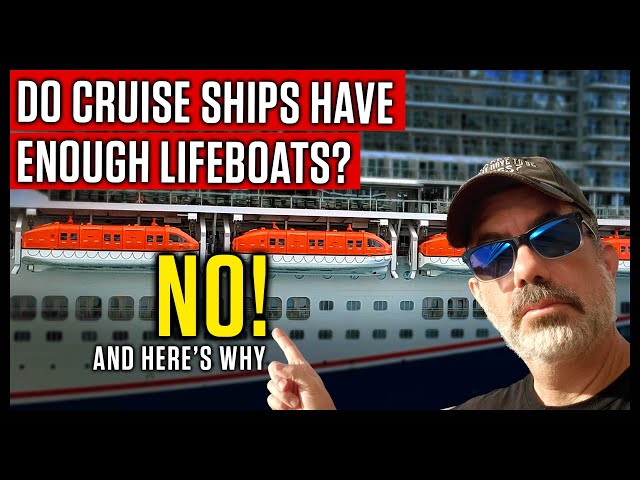
Lifeboats are small, motorized vessels designed to evacuate passengers and crew from a ship in distress. They are typically launched from davits, which are large cranes that lower the lifeboats into the water. Cruise ships are required by international maritime law to carry enough lifeboats to accommodate all passengers and crew members. These lifeboats are regularly inspected and maintained to ensure that they are ready for use in an emergency. In addition to lifeboats, most cruise ships also carry inflatable life rafts, which can be deployed quickly in the event of an emergency.
The presence of lifeboats on cruise ships provides passengers with peace of mind, knowing that they have a safe way to evacuate the ship in the event of an emergency. Lifeboats have been instrumental in saving countless lives at sea, and they continue to be an essential safety feature on all cruise ships.
Do Cruise Ships Have Lifeboats?
Lifeboats are an essential safety feature on cruise ships, providing a safe means of evacuation in the event of an emergency. Here are six key aspects to consider:
- Number: Cruise ships are required by law to carry enough lifeboats to accommodate all passengers and crew.
- Capacity: Lifeboats vary in size, but they are typically designed to hold between 100 and 150 people.
- Location: Lifeboats are located throughout the ship, so that passengers can quickly and easily reach one in an emergency.
- Launching: Lifeboats are launched using davits, which are large cranes that lower the lifeboats into the water.
- Equipment: Lifeboats are equipped with a variety of safety features, including radios, flares, and medical supplies.
- Maintenance: Lifeboats are regularly inspected and maintained to ensure that they are ready for use in an emergency.
These six aspects highlight the importance of lifeboats on cruise ships. By providing a safe means of evacuation, lifeboats help to ensure the safety of passengers and crew in the event of an emergency.
Number
The legal requirement for cruise ships to carry enough lifeboats for all passengers and crew is a critical aspect of maritime safety. This regulation ensures that, in the event of an emergency, everyone on board has a safe means of evacuation.
-
Facet 1: Historical Context
The requirement for lifeboats on cruise ships has evolved over time, informed by maritime disasters and technological advancements. The sinking of the RMS Titanic in 1912 was a major catalyst for stricter regulations, leading to the establishment of the International Convention for the Safety of Life at Sea (SOLAS).
-
Facet 2: International Standards
SOLAS sets forth detailed requirements for the number, capacity, and equipment of lifeboats on cruise ships. These standards are regularly updated and revised to reflect best practices and technological advancements in maritime safety.
-
Facet 3: Inspection and Enforcement
Cruise ships are subject to regular inspections by maritime authorities to ensure compliance with SOLAS regulations. These inspections verify the number, condition, and readiness of lifeboats on board.
-
Facet 4: Implications for Cruise Ship Design
The requirement for sufficient lifeboats has a significant impact on the design of cruise ships. Architects must carefully consider the placement and capacity of lifeboats to ensure that they can be launched quickly and safely in an emergency.
Overall, the legal requirement for cruise ships to carry enough lifeboats is a vital safety measure that helps to protect the lives of passengers and crew in the event of an emergency.
Capacity
The capacity of lifeboats is a critical aspect of their effectiveness in evacuating passengers and crew from a cruise ship in the event of an emergency. The number of people a lifeboat can hold determines how many people can be evacuated at once, and how quickly.
-
Facet 1: Evacuation Efficiency
The capacity of lifeboats directly impacts the efficiency of evacuating a cruise ship. The larger the capacity of the lifeboats, the more people can be evacuated at once, reducing the time it takes to evacuate the entire ship.
-
Facet 2: Regulatory Compliance
The capacity of lifeboats is also regulated by maritime authorities. Cruise ships are required to carry enough lifeboats to accommodate all passengers and crew. The capacity of the lifeboats must be sufficient to meet this requirement.
-
Facet 3: Design Considerations
The capacity of lifeboats also influences the design of cruise ships. Architects must carefully consider the placement and size of lifeboats to ensure that they can be launched quickly and safely in an emergency. The capacity of the lifeboats must also be taken into account when designing evacuation routes and procedures.
-
Facet 4: Passenger Safety
Ultimately, the capacity of lifeboats is a critical factor in ensuring the safety of passengers and crew in the event of an emergency. By providing sufficient capacity, lifeboats help to ensure that everyone on board can be evacuated quickly and safely.
The capacity of lifeboats is a vital aspect of the safety features on cruise ships. By providing sufficient capacity, lifeboats help to ensure the safe evacuation of passengers and crew in the event of an emergency.
Location
The strategic placement of lifeboats throughout a cruise ship is a critical aspect of its safety features. This arrangement ensures that passengers can quickly and easily reach a lifeboat in the event of an emergency, regardless of their location on the ship.
-
Facet 1: Evacuation Efficiency
The placement of lifeboats throughout the ship reduces the time it takes for passengers to evacuate. By providing multiple access points to lifeboats, passengers can reach a lifeboat quickly, even if their usual evacuation route is blocked.
-
Facet 2: Regulatory Compliance
The location of lifeboats is also regulated by maritime authorities. Cruise ships are required to have a sufficient number of lifeboats, and these lifeboats must be located throughout the ship to ensure that all passengers can reach a lifeboat quickly and safely.
-
Facet 3: Passenger Safety
Ultimately, the location of lifeboats is a critical factor in ensuring the safety of passengers in the event of an emergency. By providing multiple access points to lifeboats, cruise ships help to ensure that all passengers can evacuate quickly and safely.
The location of lifeboats is an essential aspect of the safety features on cruise ships. By providing multiple access points to lifeboats, cruise ships help to ensure the safe evacuation of passengers in the event of an emergency.
Launching
The launching mechanism of lifeboats on cruise ships is an integral part of their safety features. Davits, which are large cranes, play a crucial role in ensuring the safe and efficient evacuation of passengers and crew in the event of an emergency.
-
Facet 1: Efficient and Safe Evacuation
Davits provide a controlled and efficient method for launching lifeboats. They allow lifeboats to be lowered into the water quickly and safely, even in rough seas or strong winds.
-
Facet 2: Regulatory Compliance
The use of davits for launching lifeboats is mandated by maritime regulations. These regulations ensure that cruise ships have a reliable and effective system for evacuating passengers and crew in an emergency.
-
Facet 3: Crew Training and Maintenance
The safe operation of davits requires proper training and maintenance. Cruise ship crews undergo regular training to ensure they are proficient in launching lifeboats using davits.
-
Facet 4: Redundancy and Safety Features
Cruise ships typically have multiple davits, providing redundancy in the event of a malfunction or damage. Additionally, davits are equipped with safety features such as emergency release mechanisms to ensure the safe launch of lifeboats.
The use of davits to launch lifeboats is a critical aspect of the safety features on cruise ships. By providing a safe and efficient means of evacuation, davits help to ensure the safety of passengers and crew in the event of an emergency.
Equipment
The equipment carried on lifeboats is a vital aspect of their functionality and effectiveness in emergency situations on cruise ships.
-
Facet 1: Communication and Signaling
Radios and flares are crucial for communication and signaling in the event of an emergency. Radios allow lifeboats to communicate with other vessels and shore authorities, while flares provide a visual signal to indicate their location and need for assistance.
-
Facet 2: First Aid and Medical Care
Medical supplies are essential for providing immediate medical attention to passengers and crew in case of injuries or medical emergencies during an evacuation.
-
Facet 3: Survival Gear
Lifeboats are often equipped with survival gear such as blankets, water, and food rations to sustain passengers and crew in the event of a prolonged evacuation or emergency situation.
-
Facet 4: Safety Enhancements
Lifeboats may also be equipped with additional safety features such as searchlights, life jackets, and fire extinguishers to enhance the safety and well-being of passengers and crew during an emergency.
In summary, the equipment carried on lifeboats plays a critical role in ensuring the safety and well-being of passengers and crew during an emergency on a cruise ship. By providing communication, medical care, survival gear, and safety enhancements, these lifeboats are equipped to handle various emergency situations and increase the likelihood of a successful evacuation.
Maintenance
Regular inspection and maintenance of lifeboats are crucial components of the comprehensive safety measures in place on cruise ships. These practices directly contribute to the effectiveness of lifeboats in emergency situations, ensuring that they are ready for use and capable of protecting the lives of passengers and crew.
Firstly, regular inspections allow for the early detection and rectification of any potential issues or malfunctions in the lifeboats. Through thorough examinations, trained professionals can identify and address minor problems before they escalate into major failures, ensuring that the lifeboats are in optimal working condition at all times.
Moreover, regular maintenance is essential for ensuring the reliability and longevity of lifeboats. Proper maintenance practices, such as lubrication, cleaning, and replacement of worn parts, help prevent deterioration and extend the lifespan of these critical safety assets. This proactive approach minimizes the risk of unexpected breakdowns or failures, which could have severe consequences in an emergency.
Real-life examples underscore the significance of regular maintenance. In 2013, the cruise ship Carnival Triumph experienced a fire in its engine room, leaving it adrift in the Gulf of Mexico. Fortunately, the lifeboats on board were well-maintained and fully operational, enabling the safe evacuation of all passengers and crew. This incident highlights the vital role of maintenance in ensuring the effectiveness of lifeboats during emergencies.
Understanding the connection between maintenance and the provision of lifeboats on cruise ships is of practical significance. It emphasizes the need for cruise operators to prioritize and invest in proper maintenance practices to uphold the integrity and reliability of their lifeboats. By doing so, cruise lines can provide their passengers with peace of mind, knowing that they are equipped with the necessary safety measures to protect them in the event of an emergency.
In conclusion, the regular inspection and maintenance of lifeboats are indispensable aspects of the safety infrastructure on cruise ships. Through proactive maintenance and timely repairs, cruise operators ensure that lifeboats remain in optimal condition, ready to serve their life-saving purpose when needed. This understanding underscores the importance of ongoing maintenance as an integral component of providing effective lifeboat protection for passengers and crew.
FAQs on "Do Cruise Ships Have Lifeboats?"
Cruise ships are designed with a comprehensive suite of safety measures, including lifeboats, to ensure the well-being of passengers and crew in the unlikely event of an emergency. Here are answers to some frequently asked questions regarding lifeboats on cruise ships:
Question 1: Are lifeboats mandatory on cruise ships?
Answer: Yes, cruise ships are required by international maritime law to carry enough lifeboats to accommodate all passengers and crew. This regulation ensures that every person on board has a safe means of evacuation in case of an emergency.
Question 2: Where are lifeboats located on cruise ships?
Answer: Lifeboats are strategically positioned throughout the ship to provide easy access for passengers and crew. They are typically located on the outer decks, close to evacuation points.
Question 3: How are lifeboats launched?
Answer: Lifeboats are launched using davits, which are large cranes that lower the lifeboats into the water. This mechanism ensures safe and efficient evacuation, even in rough sea conditions.
Question 4: What equipment do lifeboats carry?
Answer: Lifeboats are equipped with a range of safety features, including radios, flares, medical supplies, food, and water. This equipment enables lifeboats to sustain passengers and crew during an emergency evacuation.
Question 5: Are lifeboats regularly maintained?
Answer: Yes, lifeboats undergo regular inspections and maintenance to ensure they are in optimal working condition. This includes testing equipment, checking for damage, and performing necessary repairs.
In summary, cruise ships are equipped with an adequate number of lifeboats that are strategically located, properly equipped, and regularly maintained. These lifeboats serve as a vital safety measure, providing a means of evacuation for passengers and crew in the event of an emergency.
The presence of lifeboats on cruise ships instills confidence in passengers and contributes to the overall safety of the cruise experience.
For further information regarding lifeboats on cruise ships, refer to the United States Coast Guard website or contact your preferred cruise line.
Tips for Understanding Lifeboats on Cruise Ships
Cruise ships are equipped with lifeboats as a vital safety measure in the unlikely event of an emergency. Here are some informative tips to enhance your understanding of lifeboats on cruise ships:
Tip 1: Familiarize Yourself with Lifeboat Locations
Upon boarding the ship, take some time to locate the lifeboats. Familiarize yourself with the nearest lifeboat to your cabin and alternative routes to reach it. This knowledge will be crucial in an emergency situation.
Tip 2: Attend the Safety Briefing
All cruise ships conduct mandatory safety briefings at the beginning of the voyage. These briefings include information about lifeboats, their locations, and proper evacuation procedures. Pay close attention and ask any questions you may have.
Tip 3: Understand Lifeboat Capacity
Lifeboats have a limited capacity, so it's important to know how many people each lifeboat can accommodate. This information is usually displayed near the lifeboats. In an emergency, only the designated number of people should board a lifeboat to ensure safe evacuation.
Tip 4: Prepare a Grab-and-Go Bag
In the event of an emergency evacuation, you may not have time to gather your belongings. Prepare a small, waterproof bag with essential items such as your passport, medications, and valuables. Keep this bag easily accessible in your cabin.
Tip 5: Stay Informed and Follow Instructions
During an emergency, the crew will provide clear instructions and announcements regarding evacuation procedures. Listen attentively and follow their instructions promptly. Staying informed and calm will contribute to a safe and orderly evacuation.
Summary
Understanding lifeboats on cruise ships is essential for your safety and peace of mind. By following these tips, you can familiarize yourself with lifeboat locations, procedures, and preparations. Remember, lifeboats are a vital safety feature, and your cooperation is crucial in ensuring a successful evacuation in the unlikely event of an emergency.
For more information and specific details about lifeboats on your particular cruise ship, consult with the crew or refer to the passenger safety manual provided on board.
Conclusion
In summary, cruise ships are equipped with lifeboats as a critical safety measure to ensure the well-being of passengers and crew in an emergency. These lifeboats are strategically located throughout the ship, properly equipped, and regularly maintained to provide a safe means of evacuation.
It is essential for passengers to familiarize themselves with lifeboat locations, procedures, and preparations. By following safety instructions and remaining informed, individuals can contribute to a safe and orderly evacuation in the unlikely event of an emergency.
Cruise ships adhere to strict maritime regulations and undergo regular inspections to ensure compliance with safety standards. The presence of lifeboats on cruise ships provides peace of mind to passengers and reinforces the commitment of the cruise industry to safety and well-being.
Youtube Video:


No comments:
Post a Comment